Research

Research
Major Research Findings
총 114건의 게시물이 있습니다.
There are a total of 114 posts.
-
Research
Revolutionary Approach to Overcoming Drug Resistance in Cancer TreatmentTheir findings have been published in the Advanced Science on January 13, 2025.JooHyeon HeoAbstract Autophagy is a crucial quality control mechanism that degrades damaged cellular components through lysosomal fusion with autophagosomes. However, elevated autophagy levels can promote drug resistance in cancer cells, enhancing their survival. Downregulation of autophagy through oxidative stress is a clinically promising strategy to counteract drug resistance, yet precise control of oxidative stress in autophagic proteins remains challenging. Here, a molecular design strategy of biocompatible neutral Ir(III) photosensitizers is demonstrated, B2 and B4, for precise reactive oxygen species (ROS) control at lysosomes to inhibit autophagy. The underlying molecular mechanisms for the biocompatibility and lysosome selectivity of Ir(III) complexes are explored by comparing B2 with the cationic or the non-lysosome-targeting analogs. Also, the biological mechanisms for autophagy inhibition via lysosomal oxidation are explored. Proteome analyses reveal significant oxidation of proteins essential for autophagy, including lysosomal and fusion-mediator proteins. These findings are verified in vitro, using mass spectrometry, live cell imaging, and a model SNARE complex. The anti-tumor efficacy of the precise lysosomal oxidation strategy is further validated in vivo with B4, engineered for red light absorbance. This study is expected to inspire the therapeutic use of spatiotemporal ROS control for sophisticated modulation of autophagy. A research team, affiliated with UNIST has unveiled an innovative technology to eliminate drug-resistant cancer cells using light. Professors Tae-Hyuk Kwon and Duyoung Min from the Department of Chemistry at UNIST, alongside Professor Taiho Park from POSTECH, have created a photoreactive compound capable of suppressing autophagy in cancer cells—one of the key mechanisms contributing to resistance against anticancer therapies. Cancer cells are known for their remarkable adaptability, posing significant challenges in the development of effective treatments. One of their survival strategies is autophagy, a process in which cells degrade and recycle waste products. This mechanism not only allows cancer cells to expel anticancer drugs but also provides them with energy by repurposing the waste materials, thereby evading immune detection. To combat this autophagy, the research team designed a photoreactive compound that integrates morpholine and iridium. Morpholine selectively targets cell lysosomes, the organelles where autophagy occurs, while iridium activates upon exposure to light to induce oxidative damage. Figure 1. Schematic illustration of the dual role of reactive oxygen species (ROS) in autophagy. In preclinical studies, when this photoreactive compound was administered to mice with drug-resistant pancreatic cancer and subsequently exposed to infrared light, the results were striking. The resistant pancreatic cancer tissues diminished significantly, with complete tumor eradication observed within just seven days. Analysis revealed that the compound, upon light activation, disrupted the lysosomal membrane and prevented its fusion with autophagosomes—structures responsible for isolating cellular waste. The research team noted that they plan to investigate additional proteins involved in this oxidative damage process. Mingyu Park from the Department of Chemistry served as the lead researcher on this study, with O2Medi Co., Ltd. conducting assessments of toxicity and anticancer efficacy using an animal model. Professor Kwon remarked, "This groundbreaking approach to targeting autophagy could significantly enhance treatment options for major intractable cancers that exhibit drug resistance." He added, "We are also exploring the efficacy of combination therapies that incorporate existing anticancer agents alongside gemcitabine." Their findings have been published in the Advanced Science on January 13, 2025. This study has been supported by the National Research Foundation of Korea (NRF), the National Cancer Center (NCC), the Korea Technology and information Promotion Agency for SMEs, the Korea Innovation Foundation, and UNIST. Journal Reference Mingyu Park, Jung Seung Nam, Taehyun Kim, et al., "Rational Design of Biocompatible Ir(III) Photosensitizer to Overcome Drug-Resistant Cancer via Oxidative Autophagy Inhibition," Adv. Sci., (2025).- 2025.01.22
- 923
-
Research
New Research Uncovers Blue Light's Role in Damaging Cellular Proteins by Bypassing Antioxidant Defense SystemsTheir findings have been published in the December 2024 issue of Nature Communications.JooHyeon HeoAbstract Oxidative modifications can disrupt protein folds and functions, and are strongly associated with human aging and diseases. Conventional oxidation pathways typically involve the free diffusion of reactive oxygen species (ROS), which primarily attack the protein surface. Yet, it remains unclear whether and how internal protein folds capable of trapping oxygen (O2) contribute to oxidative damage. Here, we report a hidden pathway of protein damage, which we refer to as O2-confined photooxidation. In this process, O2 is captured in protein cavities and subsequently converted into multiple ROS, primarily mediated by tryptophan residues under blue light irradiation. The generated ROS then attack the protein interior through constrained diffusion, causing protein damage. The effects of this photooxidative reaction appear to be extensive, impacting a wide range of cellular proteins, as supported by whole-cell proteomic analysis. This photooxidative mechanism may represent a latent oxidation pathway in human tissues directly exposed to visible light, such as skin and eyes. A research team, consisting of Professors Duyoung Min, Tae-Hyuk Kwon, and Seung Kyu Min from the Department of Chemistry at UNIST, announced that they have identified a novel pathway through which blue light can damage cellular proteins. Blue light, which emanates from sunlight, LED-based display devices, and indoor lighting, is a form of high-energy visible light that is not effectively blocked by standard sunscreen. This type of light can penetrate the cornea and lens of the eye, reaching the retina. Upon reaching the body, blue light is known to induce oxidative damage to cellular proteins, which can adversely affect skin and eye health. When dissolved oxygen in the body absorbs blue light, it is transformed into highly reactive oxygen species (ROS). This ROS can oxidize and damage the protein surface by infiltrating between proteins within cells. Fortunately, the intracellular antioxidant system can mitigate this protein damage by neutralizing ROS. Figure 1. Proposed pathway of O2-confined photooxidation. However, the protein damage pathway discovered by the research team occurs within protein cavities that are beyond the reach of the antioxidant system. In this mechanism, oxygen trapped in these cavities interacts with specific amino acids and absorbs blue light energy, converting it into ROS. The resulting ROS then diffuses through the protein cavity, ultimately leading to protein damage. The research team conceptualized this pathway based on the structural properties of proteins. Proteins possess complex structures in which amino acid chains are intricately folded, creating numerous spaces that can capture small molecules. A variety of experiments, calculations, statistical analyses, and bioinformatics approaches were employed to substantiate their findings from multiple perspectives. This novel pathway of protein damage has been designated the "oxygen-defined photooxidation pathway." Professor Min stated, "We have discovered a new protein damage pathway that is fundamentally different from the conventional mechanisms of protein damage, and we have demonstrated that it can universally affect proteins throughout the cell." He further explained, "This newly identified protein damage pathway may represent a hidden principle contributing to aging or disease processes in skin and eye tissues due to blue light exposure." The research findings were published in the December 2024 issue of Nature Communications. The work was supported by the National Research Foundation of Korea (NRF) and UNIST. Journal Reference Seoyoon Kim, Eojin Kim, Mingyu Park, et al., "Hidden route of protein damage through oxygen-confined photooxidation," Nat. Comm., (2024).- 2025.01.14
- 1100
-
Research
Breakthrough in Nanothermometry: Real-Time Observation of Material Structure and TemperatureTheir findings have been published in the December 2024 issue of ACS Nano, a prestigious journal in the nanotechnology field.JooHyeon HeoAbstract Nanothermometry in in situ transmission electron microscopy (TEM) is useful for comprehending the functioning mechanisms of the heterogeneous matter through real-time observations. Herein, we introduce a Boltzmann-distribution-driven cathodoluminescence (CL) nanothermometry for in situ local temperature probing in TEM. The population distribution across the close-lying Stark sublevels of dysprosium ions in an yttrium vanadate matrix follows the Boltzmann distribution, enabling the use of the CL-intensity ratio as a thermometry over a wide temperature range of 103–435 K with a relative sensitivity exceeding 3% K–1 and precision of ±2%. Superior to other CL-based thermometries, the present approach is independent of electron–beam parameters and dopant concentration, extending the robustness and applicability of CL-based nanothermometry in electron microscopy. We further demonstrate the real-time mapping of the temperature distribution across a TEM grid under laser irradiation. Technological advancements in the simultaneous observation of ultrafine structures and temperature changes in materials are paving the way for the development of advanced materials. This innovation is expected to facilitate the analysis of the correlation between specific structures and the thermodynamic properties of samples. A research team, led by Professor Oh-Hoon Kwon in the Department of Chemistry at UNIST announced the development of a versatile nanothermometer, capable of accurately measuring the temperature of micro-samples in transmission electron microscopy (TEM). This newly-designed nanothermometer measures temperature by analyzing the cathodoluminescence (CL) spectrum emitted by nanoparticles that serve as thermometers when subjected to an electron beam. In TEM, the electron beam acts as a source of illumination for observing the microstructure of a sample and is also employed for temperature measurements. While previously developed nanothermometers could be used alongside in situ TEM for observing microstructure changes, they required adjustments based on the strength of the electron beam, which posed significant challenges to researchers. Figure 1. Schematic image describing the basic principle of temperature measurement of the developed nanothermometer. In this study, the research team enhanced the reliability and versatility of the thermometer by selecting different nanothermometer materials. They chose dysprosium ions (Dy3+) as the active material for cathode ray emission, allowing for improved performance. Researcher Won-Woo Park, the lead author of the study, explained, "The distribution of quantum states in the CL spectrum of Dy³⁺ follows a Boltzmann distribution that is solely dependent on temperature, regardless of the strength of the electron beam." The Boltzmann distribution is a statistical distribution that describes the phenomenon by which the proportion of high-energy quantum states increases with rising temperature. The research team incorporated Dy3+ into yttrium vanadate (YVO4), a material capable of withstanding the high energy of the electron beam, to synthesize nanothermometer particles measuring 150 nm. When evaluated over a temperature range from -170°C to 50°C, the measurement error of the developed thermometer was within approximately 4°C. Figure 2. Figure 6. In situ temperature measurements under laser heating. Additionally, the team successfully raised the temperature by irradiating the sample with a laser beam and tracked the spatial distribution of temperature changes. This achievement underscores the effectiveness of the technology for simultaneously observing temperature and structural changes in real time due to external stimuli. Professor Kwon remarked, "By redesigning the material for the nanothermometer, we have significantly improved the reliability of temperature measurements and enhanced versatility." He added, "This innovation will also contribute to the development of temperature-sensitive secondary battery materials and display materials for charging and discharging applications." The study was co-authored by Dr. Pavel K. Olshin, the primary author, and Professor Ye-Jin Kim, a UNIST graduate appointed to the Department of Chemistry at Seoul National University last year, as a co-author. The research findings were published in the December 2024 issue of ACS Nano, a prestigious journal in the nanotechnology field. The work was supported by the Samsung Future Technology Promotion Project and the National Research Foundation of Korea (NRF). Journal Reference Pavel K. Olshin, Won-Woo Park, Ye-Jin Kim, et al., "Boltzmann-Distribution-Driven Cathodoluminescence Thermometry in In Situ Transmission Electron Microscopy," ACS Nano, (2024).- 2025.01.13
- 1674
-
Research
The Science Behind the Foldable Molecular PathsThe work by Professor Wonyoung Choe has been appeared in Angewandte Chemie International Edition on November 21, 2024. This study highlights a groundbreaking development in foldable molecular paths within solid-state frameworks, illuminating their potential for dynamic pore control and transformative applications in molecular metamaterials.JooHyeon HeoAbstract Paper crafts, such as origami and kirigami, have become an interdisciplinary research theme transportable from art to science, and further to engineering. Kirigami-inspired architectural design strategies allow the establishment of three-dimensional (3D) mechanical linkages with unprecedented mechanical properties. Herein, we report a crystalline zeolitic imidazolate framework (ZIF), displaying folding mechanics based on a kirigami tessellation, originated from the double-corrugation surface (DCS) pattern. Pressure- and guest-induced responses demonstrate the kirigami mechanism of the ZIF, wherein imidazolate linkers act as hinges, controlling pore dimensionality, resembling the check valve-adapted mechanical manifold. This discovery of the kirigami tessellation inside a flexible ZIF reveals foldable mechanics at the molecular level. The inspiration for this work stems from the elegant simplicity of folding paper—a concept that led researchers to explore the possibility of replicating this flexibility at the molecular level. After extensive experimentation, they unveiled foldable molecular paths capable of react dynamically to their environment. Led by Professor Wonyoung Choe in the Department of Chemistry at UNIST, the research team achieved a significant breakthrough in this field. They developed foldable molecular paths using zeolitic imidazolate frameworks (ZIFs), a type of highly porous material. These frameworks can adjust their size, shape, and alignment at the nanoscale in response to temperature, pressure, and gas interactions. This unique capability allows them to regulate gas flow in a manner similar to how valves control water flow in pipelines. The team chose ZIFs due to their exceptional flexibility. Unlike traditional materials, the tetrahedral zinc centers within ZIFs function as hinges, enabling the structure to fold and adapt dynamically. Using advanced X-ray diffraction techniques, the researchers observed how the framework responded to various stimuli, showcasing its potential for real-world applications. These materials are not just scientific curiosities—they possess considerable practical potential. They could be employed to create filters that adapt in order to capture harmful gases more efficiently or to design purification systems capable of selectively removing contaminants. The study also highlighted a simplified version of the "Plumber’s Nightmare," a complex pore network, suggesting that the foldable design holds the key to mastering such intricate structures. "This work demonstrates that foldable mechanisms can be realized at the molecular level, paving the way for advanced molecular materials, such as smart adsorbents," said Professor Choe. "We anticipate transformative applications in energy, environmental science, and biomedicine." The findings of this research have been published in Angewandte Chemie International Edition, on November 21, 2024. This study was supported by the National Research Foundation (NRF) of Korea through the Mid-Career Researcher Program and Hydrogen Energy Innovation Technology Development Project, and UNIST. Journal Reference Joohan Nam, Dr. Eunji Jin, Dr. Leila Abylgazina, et al., "Pore Structure Modulation in Kirigamic Zeolitic Imidazolate Framework," Angew. Chem., Int. Ed., (2024).- 2024.12.27
- 923
-
Community
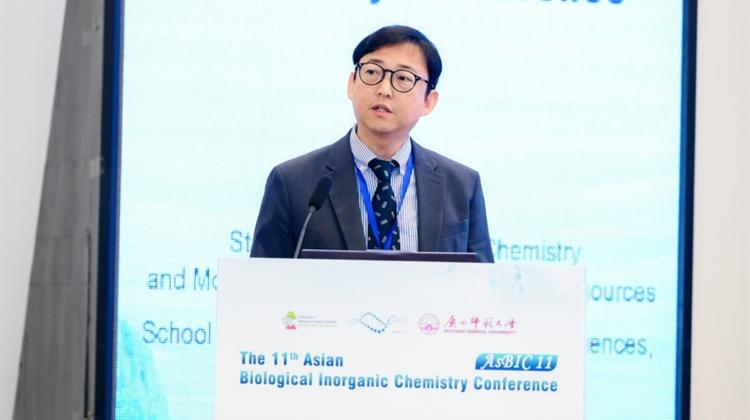
Professor Jaeheung Cho Honored with the 2024 James Hoeschele AsBIC AwardProfessor Jaeheung Cho has been honored with the James Hoeschele AsBIC Award at the 2024 Asian Biological Inorganic Chemistry (AsBIC) Conference.JooHyeon HeoProfessor Jaeheung Cho in the Department of Chemistry at UNIST has been honored with the James Hoeschele AsBIC Award at the 2024 Asian Biological Inorganic Chemistry (AsBIC) Conference, held on December 5, 2024. With this prestigious award, Professor Cho has solidified his position as one of the world's leading researchers in the fields of biological and inorganic chemistry. Professor Cho has been honored with the 2024 James Hoeschele AsBIC Award. The James Hoeschele AsBIC Award recognizes outstanding scientific contributions in biological inorganic chemistry within the Asia-Pacific region. It was established to honor research that integrates chemistry, biology, and medicine, revealing the roles and reaction mechanisms of metal ions in living organisms. Professor Cho has systematically identified the biological roles and reaction processes of metal ion compounds, providing a crucial foundation for understanding various physiological phenomena in living organisms. Notably, his development of vasodilators using transition metal-nitrogen monoxide compounds has garnered international attention and is expected to significantly impact the advancement of treatments related to vascular health care within the medical industry. In response to receiving the award, Professor Cho stated, "This recognition reflects the long-standing efforts and dedication of my research team and me," adding, "We will continue to pursue innovative research in the field of biological and inorganic chemistry in the future."- 2024.12.27
- 1196
-
Community
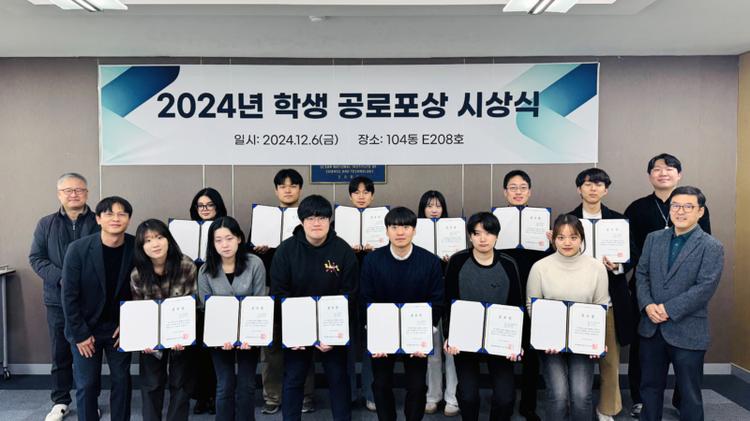
2024 Student Achievement Awards Celebrate Exceptional Student ContributionsThe 2024 Student Achievement Awards Ceremony honored 14 exceptional students for their academic and community service contributions to the campus and community.JooHyeon HeoOn December 6, 2024, the Office of Student Affairs hosted the 2024 Student Achievement Awards Ceremony, honoring fourteen outstanding students whose academic accomplishments and community service initiatives have made a significant impact on both the campus and the wider community. At the ceremony, the recipients reflected on their efforts and achievements while expressing their commitment to future challenges and personal growth. Ho Jin Eom (Department of Mechanical Engineering), RuMi Lee (School of Energy and Chemical Engineering), JiEun Heo (School of Energy and Chemical Engineering), Hyon Jin Jo (Department of Computer Science and Engineering), Hyon Jeong (Department of Biomedical Engineering), Ji Hyun Ko (Department of Chemistry), Minsung Kho (Department of Mathematical Sciences), Ji Won Yang (School of Business Administration), Gi Han Kim (School of New UNISTars), JunYoung Chang (School of New UNISTars), Orane Farrah Rahcine (School of Business Administration), Ahyoung Choi (Department of Design), and MinHwan Kim (Department of Industrial Engineering). This prestigious award is conferred upon students who have demonstrated exceptional character and have enhanced the reputation of the university. Candidates recommended by each college and administrative department underwent meticulous review by the Student Scholarship Guidance Committee before final selection. The awardees excelled across various fields, including engineering, information technology, biotechnology, natural sciences, business administration, and design. Notably, students recommended by the School of New UNISTars, International Center, Student Residence Team, and Business Incubation Center were also recognized. Several recipients positively influenced society through teaching and volunteer activities focused on supporting vulnerable populations, including community welfare centers for individuals with disabilities and youth shelters in Ulsan. Orane Farrah Rahcine from the Department of Business Administration was also honored at the ceremony. In particular, Orane Farrah Rahcine from the Department of Business Administration made noteworthy contributions in creating a global campus environment by assisting international students in adapting to life in Korea and fostering exchanges with domestic students. Dean Young-Choon Kim of the Office of Student Affairs remarked at the ceremony, "We are all interconnected, and we always live with the support of others. Today's winners exemplify a profound understanding of and commitment to the value of helping others." He further added, "Their generosity of spirit will undoubtedly serve them well in life." The Office of Student Affairs annually selects approximately ten recipients to celebrate their passion and achievements. The ceremony concluded with renewed motivation for the awardees to develop into scientists and leaders who contribute to enhancing human life beyond their academic pursuits. Below are the 2024 Student Achievement Awards Honorees: RuMi Lee (School of Energy and Chemical Engineering) JiEun Heo (School of Energy and Chemical Engineering) Hyon Jin Jo (Department of Computer Science and Engineering) Hyon Jeong (Department of Biomedical Engineering) Ji Hyun Ko (Department of Chemistry) Minsung Kho (Department of Mathematical Sciences) Ji Won Yang (School of Business Administration) Gi Han Kim (School of New UNISTars) JunYoung Chang (School of New UNISTars) Orane Farrah Rahcine (School of Business Administration) Ahyoung Choi (Department of Design) MinHwan Kim (Department of Industrial Engineering)- 2024.12.20
- 5259
-
Community
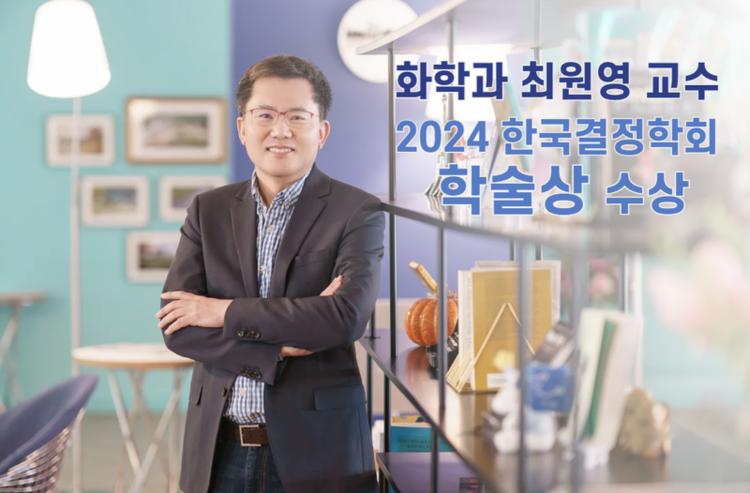
Professor Wonyoung Choe Honored with Prestigious Scholar Award at 2024 KCA ConferenceProfessor Choe received the award for his presentation at the conference, themed "Topology Matters in Functional Framework Materials."JooHyeon HeoProfessor Wonyoung Choe from the Department of Chemistry at UNIST was honored with the 'Scholar Award' at the 2024 KCA Regular Academic Conference, held at Chonnam National University on November 1, 2024. His groundbreaking research, which proposes a novel approach to material development through data screening technology, garnered significant acclaim within the academic community. The Korea Crystal Association (KCA) serves as a vital platform for exchanging cutting-edge research in the field of crystallography. This organization brings together researchers and students from life sciences, chemistry, and materials science to advance the dissemination and development of knowledge in crystallography. The Scholar Award is a prestigious recognition awarded to researchers who have made innovative and exceptional contributions in their respective fields. Professor Choe's research encompasses the development of diverse new materials, including metal-organic frameworks, zeolite-imitating porous materials, and metal-organic polyhedra. At the conference, which focused on the theme "Topology Matters in Functional Framework Materials," he presented his pioneering research that explores the intricate relationships between material structure and functionality. His compelling presentation highlighted the importance of topological concepts in the design and synthesis of novel materials. This distinguished contribution played a key role in earning him the Scholar Award. Focusing on the synthesis of materials for a sustainable future, Professor Choe has made significant strides in hydrogen storage and catalytic processes utilizing organic-inorganic mixtures. Recently, he announced the development of a material synthesis design algorithm that incorporates digital discovery technology, introducing a novel approach to synthesizing porous materials with targeted properties. Digital discovery technology enhances the traditional trial-and-error methods typically employed by chemists, allowing for a more efficient screening of a million-unit database to identify new material candidates. This innovative approach has the potential to significantly reduce time and resource waste during the pre-synthesis design stage. "We aim to create a blueprint for optimizing new material synthesis through digital screening," Professor Choe stated. "We believe that this approach, based on accumulated data, will unlock new possibilities that transcend the limitations of individual researchers."- 2024.11.22
- 4322
-
News
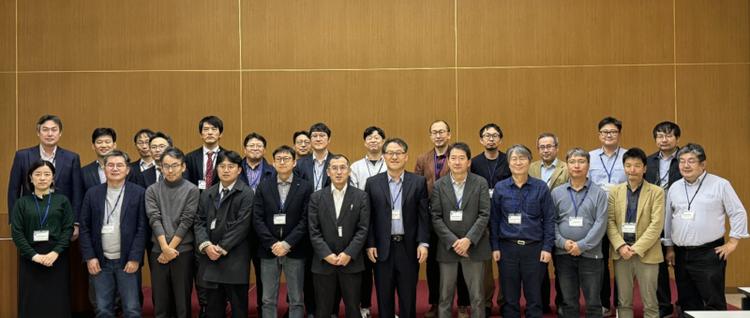
UNIST and KU Strengthen Collaboration via Joint Symposium on Chemistry and Materials ScienceThe '3rd KU-UNIST Joint Symposium on Chemistry and Materials Science' at the Uji Campus of KU in Japan, from September 6 to 10, 2024.JooHyeon HeoThe Department of Chemistry at UNIST successfully hosted the '3rd KU-UNIST Joint Symposium on Chemistry and Materials Science' at the Uji Campus of Kyoto University (KU) in Japan, from September 6 to 10, 2024. This symposium served as a platform to enhance collaboration between the two institutions, focusing on their shared vision of developing the next-generation materials and sustainable energy technologies. The event facilitated the expansion of global research networks and identified future directions for technological innovation. About 22 researchers from UNIST and KU participated in the symposium, engaging in in-depth discussions on the latest research findings across various fields, including metal-organic frameworks (MOFs), nanomaterials, organic materials, hypermolecular and biomaterials, organic/inorganic catalysts, and novel synthesis methods. The exchange of ideas laid a strong foundation for revitalizing joint research efforts and establishing a new cooperative model. Since the inaugural joint symposium in 2019, the Department of Chemistry at UNIST has remained committed to fostering international research collaboration and manpower exchange with Kyoto University. This symposium represented a significant opportunity to broaden the scope of academic exchange based on the achievements made thus far. Held for the third time following the last symposium hosted by KU and UNIST, the event was assessed as a pivotal step in solidifying the partnership between the two universities. Notably, the signing of a Memorandum of Understanding (MOU) during the symposium outlined concrete strategies for the development of next-generation materials and innovation in sustainable energy technology. Both institutions emphasized their intention to spearhead research and technological advancements, positioning themselves as leaders within the international research community. "This symposium will pave the way for practical joint research beyond traditional academic exchanges," said Jaeheung Cho, Head of the Department of Chemistry at UNIST. "Through the collaboration of our two universities, we aim to strengthen the global research network and contribute significantly to the advancement of science and technology in the future."- 2024.11.21
- 1088
-
News
UNIST Selected for ‘Semiconductor Specialization University Support Project’!With this selection, UNIST will receive a substantial sum of KRW 15 billion in support over the next four years.JooHyeon HeoUNIST is set to receive a total of 15 billion won over the next four years, composed of national, local, and response funds, to advance its efforts in cultivating professional talents for the semiconductor industry. The Ministry of Education has announced that it has selected UNIST for the '2024 Semiconductor Specialized University Support Project,' granting the institution 15 billion won (14 billion won from the national funds and 1 billion won from the local budget). This funding will enable UNIST to further expand its academic programs and establish a comprehensive system for nurturing full-time professionals in the semiconductor sector. Launched in 2023, the 'Semiconductor Specialized University Support Project' aims to create a robust training system and modern facilities for developing skilled professionals who meet industry demands. The initiative encompasses both singular and shared growth models, targeting institutions in metropolitan and non-metropolitan areas. UNIST was ultimately selected through a competitive re-public offering as a recipient for the non-metropolitan category. In 2021, UNIST established the Graduate School of Semiconductors Materials and Devices Engineering, and in 2023, it was selected for the 'Semiconductor Specialization Graduate School Support Project' in 2023 by the Ministry of Trade, Industry, and Energy (MOTIE), producing an impressive 65 skilled talents each year. Over the next four years, UNIST plans to train 220 skilled professionals in essential areas, such as materials, devices, processes, and packaging. Five departments, including the Department of New Materials Engineering, will collaborate to establish a "Semiconductor Specialized Convergence Major," which will feature an industry-academia linked curriculum that includes intensive lectures, hands-on projects, and industrial practice. The funds from the national budget will be allocated for faculty salaries, the construction of research facilities, the acquisition of research equipment, and curriculum development. Additionally, Ulsan Metropolitan City will contribute 1 billion won over three years starting in 2025 to support semiconductor talent cultivation. UNIST is committed to producing professionals who can be immediately deployed to research and development sites. Students will take the lead in researching core semiconductor technologies, deepening their understanding, and receiving systematic training that fosters collaboration with industry partners, ultimately preparing them as capable practitioners. "We will systematically cultivate practical talents who will lead the future of the semiconductor industry," said Professor Soo-Hyun Kim, Head of the initiative and a faculty member in the Department of New Materials Engineering. "Our focus will be on innovative education and research to enhance our position in the global competitive landscape." As semiconductors are integral to a wide array of technology sectors, from everyday applications to advanced industries, the demand for skilled professionals in this field is rapidly increasing. UNIST's selection for this project is expected to significantly contribute to strengthening semiconductor competitiveness both regionally and nationally.- 2024.10.23
- 4897
-
Research
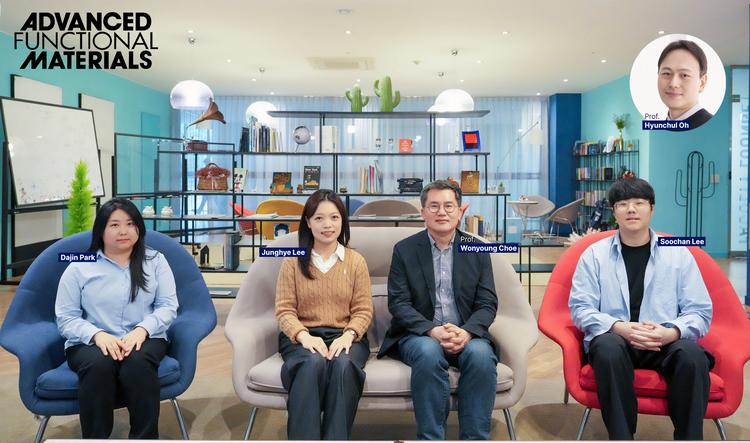
Leveraging Skyscraper Architecture for Breakthroughs in Metal-Organic Framework DesignTheir findings have been published in Advanced Functional Materials, a prestigious journal in the field, on September 17, 2024.JooHyeon HeoAbstract Porous materials have attracted considerable interest as water sorbents due to their potential in a broad range of water sorption-related applications. Metal–organic frameworks (MOFs) are particularly notable for their high porosity and tunability. However, their limited hydrolytic stability often results in pore collapse, which significantly hinders their water sorption performance. To address this issue, an innovative design strategy based on reticular chemistry is essential to enhance structural stability and ensure efficient water sorption. Herein, a novel synthetic approach for constructing a merged-net MOF structure using metallolinkers is introduced. Specifically, a porphyrin linker is employed to successfully synthesize a porphyrin-based merged-net MOF, UPF-5. This MOF demonstrates significantly enhanced hydrolytic stability and improved water sorption performance while maintaining high pore volume. Additionally, the structure of UPF-5 allows for the modification of accessible Zr6 nodes, enabling control over the pore environments and fine-tuning the water sorption properties. This programmable synthetic strategy for porphyrin-based merged-net MOFs not only significantly enhances the structural stability for practical applications, including water sorption, but also advances reticular chemistry by discovering unprecedented topologies in MOF chemistry. The Burj Khalifa, the tallest building in the world, employs advanced construction techniques designed to withstand wind, seismic activity, and its own massive weight. Among these techniques is the "Meta Column System," which plays a pivotal role by strategically positioning large columns to resist lateral forces, thereby facilitating the construction of such a towering structure. What if these advanced architectural techniques could be applied to material design? Figure 1. Schematic representation of the assembly of merged-net MOF structure using metallolinkers. Metal-Organic Frameworks (MOFs) are porous materials formed by the combination of metal ions and organic ligands, resulting in structures similar to rebar in buildings. The design principle underlying MOFs closely resembles architectural planning. Professor Wonyoung Choe and his research team in the Department of Chemistry at UNIST have successfully synthesized a new MOF employing a design strategy akin to the "Mega Frame," termed the "Merged-Net Strategy." By incorporating large molecules within the MOF structure—similar to how columns function in architectural design—they have created “a structure within a structure,” thereby enhancing both porosity and structural stability. Figure 2. Crystal structure and characterization of UPF-5. This research represents a significant advancement in addressing the enduring challenge of material stability in conventional MOFs. The newly developed MOF not only demonstrates exceptional water stability and structural integrity but also exhibits superior water adsorption capacity and reusability compared to previously reported MOFs. Moreover, the team successfully demonstrated that the water adsorption properties of the MOF can be precisely tuned by modifying the active sites within its framework, enhancing its versatility for various water sorption applications. Figure 3. Investigation of water sorption performance for UPF-5 and PCN-224. Junghye Lee, the first author of the study, stated, "This new design method has the potential to surpass the performance of existing MOFs, significantly expanding their range of applications." Professor Choe remarked, "This research signifies a breakthrough in molecular-level precision design. By applying advanced architectural methods to molecular system, we are opening new avenues in material science." This research received support from the National Research Foundation of Korea (NRF), UNIST, and Korea Hydro & Nuclear Power Co., with collaborative efforts from Professor Hyunchul Oh's team in the Department of Chemistry at UNIST. The findings have been published in Advanced Functional Materials, a prestigious journal in the field, on September 17, 2024. Journal Reference Junghye Lee, Dajin Park, Eunji Jin, et al., "Programmable Merged-Net Porphyrinic Metal-Organic Frameworks for Water Sorption," Adv. Funct. Mater., (2024).- 2024.10.22
- 3342